Shabbat Gathering: Elul and forgiveness.

Gud Shabbos Khaveyrim, as is our custom, we will gather tonight at 5.45p ct to welcome Shabbat. These are the coordinates:
Zoom
Meeting ID: 883 8469 4181
Password: 822665
Phone: +1 312 626 6799
(To unsubscribe from the newsletter, click the link at the very bottom of this email.)
Here we go.
Welcome to the month of Elul and the countdown to the High Holy Days. The work we’re suppose to do this month to prepare for the High Holy Days is to grant and seek forgiveness. And this isn’t suppose to be easy. I don’t know about you, but I have a lot of work to do as I am pressed to fulfill this obligation.
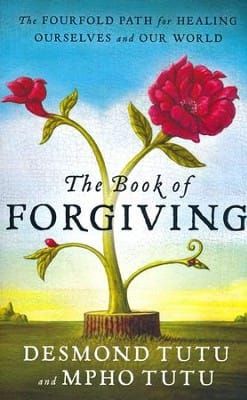
Because I have some sort of moral framework, I’m all too familiar with the things I've done that need forgiveness. These are the things that keep me up at night and the things I talk about with my therapist. Recently, she recommended a book to me, The Book of Forgiving: The Fourfold Path for Healing Ourselves and Our World, by Desmond Tutu and his daughter, Mpho Tutu.
The Fourfold Path.
The book primarily focuses on giving forgiveness and draws from personal stories around the world including personal stories from the authors’ own South African experience. It lays out what the authors call the fourfold path. That path to granting forgiveness goes like this:
- Telling the story - We speak the truth starting with the facts and tell a friend, loved one, trusted person, the perpetrator, or the public. We accept that whatever has happened cannot be changed or undone.
- Naming the hurt - We identify the feelings within the facts remembering that no feeling is wrong, bad, or invalid. We work with someone who will acknowledge us and listen to our feelings without trying to fix them. We accept our own vulnerability and move forward when we are ready.
- Granting forgiveness - We recognize that forgiveness is a choice and that we grow through forgiving because forgiving is how we move from victim to hero in our story. We know we are healing when we are able to tell a new story
- Renewing or releasing the relationship - Our preference is to renew a relationship unless there is a question of safety. We ask for what we need from the perpetrator in order to renew or release the relationship. We may need an apology, an explanation, or to never see that person again after looking at our part in the conflict. If we renew a relationship, it is stronger for what you have been through, but it is always different, but by renewing or releasing a relationship we free ourselves from victimhood and trauma.
Of course, there's the other side of forgiveness: asking for forgiveness. The Tutus cover this too, but to a lesser extent than giving forgiveness. For me, asking for forgiveness was the most valuable section of the book as I need so much forgiveness for all I've done.
May your journey through Elul be filled with the relief forgiveness can grant us.
And may it be for all of us a blessing.
See you tonight!
Mit vareme grusn,
(With warm regards,)
All my love,
brian.
PS
 PJ Grisar
 Shira Li Bartov
 Leah Grisham
 Leah Grisham
 Debbie Reichmann
 Michele Goldsmith
DuoYid

-30-